Table Of Content
This colour-focused option uses pH-balancing formulas to strengthen and fortify hair, with a bold claim of leaving strands three times stronger. The shampoo does indeed deliver a thorough yet gentle clean and, once dried, hair is bestowed with impressive volume. While this shampoo can cleanse your hair to a degree, you wouldn’t want to replace it with your standard option because the more you use it, the darker and more pigmented it can make your color, says O’Connor. So instead, use it once every few shampoos (four to six washes) to maintain color and upkeep your hair between salon visits, she says. But we demand rent from the brassiness and dullness that happens after a few weeks. That’s where color-depositing shampoo (think purple shampoo) comes into the picture.
Shampoo strategically
Beyoncé Shared Her Wash Day Routine and Addressed Hair Stigmas - Teen Vogue
Beyoncé Shared Her Wash Day Routine and Addressed Hair Stigmas.
Posted: Mon, 22 Apr 2024 17:09:01 GMT [source]
However, this can be a challenge for color-treated hair that’s also oily. You can help reduce the number of washes by using dry shampoo every other day. People with naturally oily hair don’t necessarily have to worry about excessive moisture loss from daily shampoo sessions because the sebum (oil) in the scalp will always make up for it. Washing your hair is commonly viewed as a straightforward, routine form of self-care. But the more that’s researched about how this seemingly simple task affects your hair health, the more confusion there seems to be about how you should wash your hair, what products to use, and how often to do it.
Apply your shampoo
Kingsley tells us you can also use a balancing serum the evening before you shampoo as well as an exfoliating pre-wash scalp mask the day you shampoo. She adds, "When you do shampoo, double cleanse." And if you have an itchy scalp between washes, consider using a daily anti-microbial scalp toner. If you are in the habit of a daily hairwash, this shampoo is specifically designed to be gentle enough for daily use.

Hair washing dos and don’ts
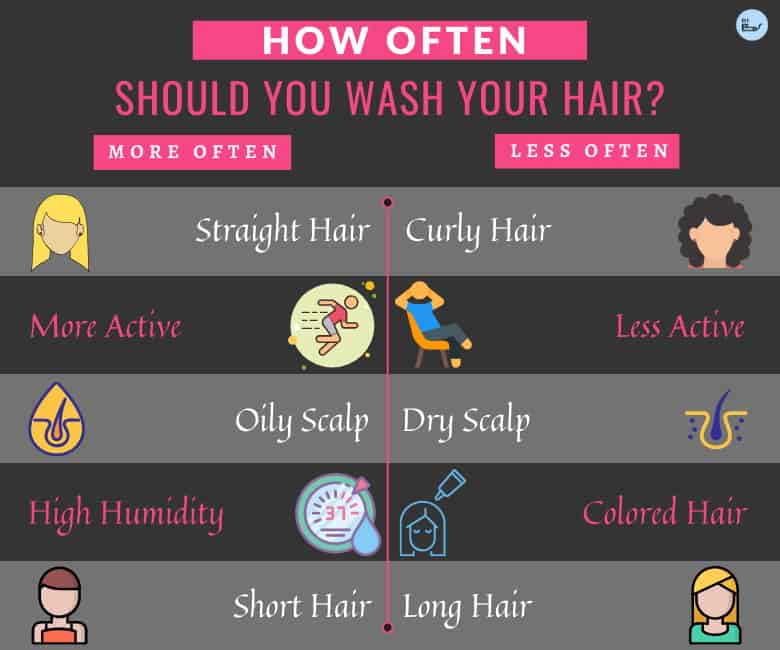
As a rough guide, hairstylist and Maria Nila ambassador Diego Miranda recommends washing hair every two to five days. "Of course, it will depend on your hair and scalp condition, and also the type of lifestyle you have," he adds. "For explample, if you exercise everyday you will feel the need to wash your hair more frequently as the sweat could lead to more grease." Above all Miranda emphasises that the hair and scalp shouldn’t be washed everyday. "It’s important to maintain the natural oils on your scalp to keep your hair hydrated."
Leading natural hair stylists and experts in the locing, growth, and management of healthy hair.
Look for moisturizing conditioners to help keep the ends of your hair from splitting or drying out. But the Grammy winner has never been afraid to push the boundaries. As she put it, "Being disruptive and challenging everything people feel should be the process has always been exciting to me." Alberto VO5's unique formula blended with the Power of Five vitamins and natural oils provides beautiful soft, shiny hair. The Grammy Award winning singer posted an archival video to her Instagram on Sunday, dubbed "Cécred Wash Day" by Beyoncé and many others, to share her wash day ritual using the products and send a message to fans. Nothing will make hair that has been chemically relaxed go back to it’s natural state.
Beyoncé fires back at haircare critics with wash-day routine - Los Angeles Times
Beyoncé fires back at haircare critics with wash-day routine.
Posted: Tue, 23 Apr 2024 19:17:51 GMT [source]
Monahan suggests rinsing the scalp with warm to hot water and adding a bit of conditioner at the ends. It will get rid of the salt residue without stripping hair of moisture. She says it’s more important to consider your hair type, texture and amount of oil production you usually experience. Instead, take the time to massage your scalp with gentle pressure, sans nails, for about 3 minutes. Aim for the same kind of pressure a stylist uses when they wash your hair and give you a scalp massage.
Overwashing, especially with harsh shampoos, can damage hair and lead to hair loss, especially when combined with chemical treatments or hair styles like tight braids that tug at the roots. People with tight curls or textured hair should wash their hair no more than once a week or every other week, according to the American Academy of Dermatology. Most people don’t need to wash their hair daily, or even every other day. How often you should wash your hair depends on quite a few factors. The basic answer, according to Seattle-based integrative dermatologist Elizabeth Hughes, is that you should wash it once it’s oily and feels unclean to the touch.
If your hair feels soft and lubricated, but not oily, in the middle of the day, you’re likely washing your locks the right amount. “I typically advise patients to keep to a standard hair washing schedule, whether it is three times per week, weekly or once per month, regardless of activity level,” she says. If you have dry hair, you might want to try rinsing with cold water, because it helps hair stay stronger and healthier. Cold water doesn’t dry out the sebum layer of your hair, a naturally lubricated barrier that protects your hair and keeps it strong. This is especially true if you have fine hair, dry hair, or hair that’s prone to frizz.
Suave Moroccan Infusion Color Care Conditioner
Hair washing might not be as easy as lather, rinse, and repeat. Here's how to properly wash your hair with the right technique and products. "I find most people don't rinse their shampoo and conditioner out properly and are left with product build-up. If you think you've rinsed enough, keep rinsing," said Craig.
Using the wrong one can lead to curly hair looking frizzy and thin hair looking flat. For instance, if you have dry hair, look for a moisturizing shampoo and conditioner, like TRESemmé Pro Pure Micellar Moisture Shampoo and Conditioner. This cleansing and moisturizing shampoo uses micellar water to give your scalp a deep cleanse and offers a strong dose of moisture. Much like how often you should wash your hair, what type of shampoo and conditioner you should look for depends on your hair type and texture, Drouillard says.
Ingredients ending in -cone like cyclomethicone, dimethicone, and amodimethicone are all silicone. Straight and thin hair needs to be washed more frequently than curly or wavy hair. Straight hair is easily coated by sebum, which means it looks greasy much faster. Thick, wavy, or curly hair tends to be dry since the oil doesn’t coat the strands as easily.
If using over-the-counter dandruff shampoos isn’t helping your dandruff, Dr. Katta recommends seeing a dermatologist to receive an accurate diagnosis. Even if it is just dandruff, your doctor may be able to prescribe a medicated shampoo that can be more effective than what you’ve tried already. It’s also important to see your dermatologist if you are experiencing hair loss since dandruff is not usually a cause of hair loss, she adds.
"Leave [your treatment or conditioner] on for at least 3-5 minutes, and thoroughly rinse your hair, especially under the crown and at the nape of your neck." "I would also recommend Silk Elements Pure Oils Moisturizing Detangling Shampoo," says Bullock. We all love a vigorous head scrub at the salon, but don't do it every day at home. According to Wintner, massaging too hard can cause breakage, and scratches on the scalp can result in scarring. "The best practice is to use the pads of your fingertips, and not your fingernails, to scrub your scalp," he says.
Once you have completely lathered around your roots, work the suds down to cleanse your mid-lengths and ends. You don’t want to add shampoo directly to the length of your hair because it can be too drying, which the younger hair at your roots can handle. There’s nothing quite like the luxurious feeling of stepping out of the shower with soft, freshly-washed hair. Washing your hair seems simple enough—just lather and rinse—but there’s actually more to it if you want to have smooth, shiny, healthy locks. You’ve got to get the right products for your hair, plus you need to know how (and how often) to use them so you’re not inadvertently making your hair worse. Once you've got those things down, you can say hello to clean, beautiful hair.
Dr. Katta advises gently rubbing in medicated shampoo (again, with your fingertips and not your nails) to the scalp as a treatment for dandruff, and leaving it there for 10 to 15 minutes before washing out. When it comes to blow-drying, Drouillard recommends using heat as infrequently as possible. But, if you must, allow your hair to air dry as long as possible. Follow this by using a heat protectant styling product, such as Paul Mitchell Neuro Prime HeatCTRL Blowout Primer or Aveda Brilliant Damage Control to prevent damage. Before you get started, brushing out all tangles will help keep it from getting matted when you’re shampooing in the shower, Drouillard says.
Make sure your conditioner is well suited to your hair by utilizing products in the same line. Let the conditioner sit for a few minutes, and rinse thoroughly. This helps to seal the outer layer of your hair, helping it look shinier.


No comments:
Post a Comment